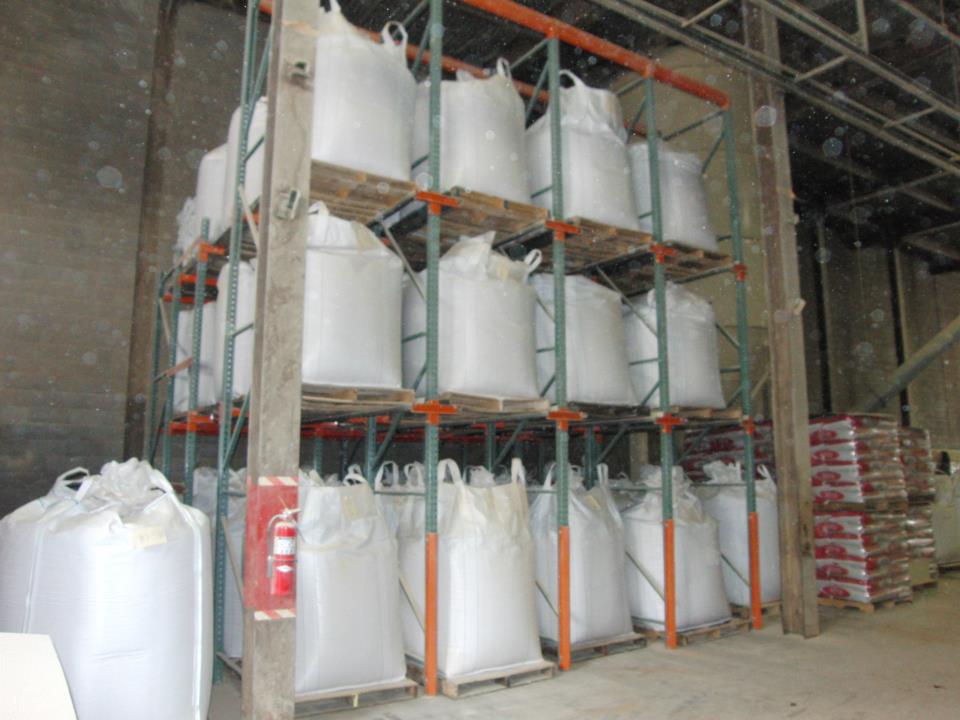
Drive-In Rack in Waco, TX
Drive-in rack stores pallets on support rails inside deep lanes. The forklift enters the lane to set or retrieve each load, exchanging individual pallet access for storage density. Grocery distribution around Texas Central Park, dairy operations in Robinson and cold-storage buildings at Temple's Rail Park are natural places to compare this system with pallet flow and pushback.
Reserve deep lanes for matching inventory
Drive-in works best when enough pallets of one stock number occupy a lane and the retrieval sequence fits the operation. Loading and retrieval from one face ordinarily produce last-in, first-out movement. A short-life product with strict rotation may need pallet flow instead; the inventory policy should lead the equipment choice.
We ask for pallets per item, batch size, receipt pattern and the number of active stock numbers. A deep lane can show a large position count while offering fewer usable positions when batches do not fill it. The design should show lane assignment assumptions alongside the count.
The truck has to fit the tunnel
Truck width, mast geometry, turning space and load width are reviewed with rail elevations and lane openings. The pallet must rest on the support arrangement while the forklift can enter and withdraw without conflicting with the structure. Clear height alone cannot establish the loading levels.
Waco's older manufacturing and distribution buildings may have roughly 18–28 feet of clear height, compared with 32–36 feet in newer big-box space. In either case, we check the forklift's lifting capacity at the intended level and the loaded pallet envelope. The rack follows that combination, not the tallest dimension on the building plan.
Cooler and freezer storage requires an operating plan
Density matters in food, beverage and poultry cooler and freezer rooms. We specify the operating temperature, pallet construction, lane depths and entry protection together. Forklift routes and staging need to keep incoming loads clear of an active retrieval lane.
Robinson's I-35 and Highway 6 junction, Temple's rail-served district and the North I-35 corridor connect different receipt patterns to Waco-area warehouses. During occasional winter hard freezes, a clear staging routine is particularly helpful for food operations. Installation is divided into agreed working areas; frames are anchored to the floor and capacity information follows the completed layout.
Plan the next storage change
Compare pallet racks, pushback rack against your load sizes and retrieval pattern.
Moving buildings? Our warehouse relocation service connects the destination rack plan with staging and installation. See the Waco-area town plans for local building considerations.
Warehouse planning questions
When is drive-in worth comparing for a Waco freezer?
Compare it when matching pallet loads arrive in batches and density is more important than reaching every load individually. The retrieval order and forklift clearances must fit the freezer's working routine.
How do Temple rail arrivals affect lane depth?
Receipt size can influence how many pallets of one item need a common lane. We still compare batch quantities with outbound turns; deeper lanes should follow actual inventory rather than rail access alone.
What pallet measurements matter for Robinson cooler rack?
We need the full loaded footprint, underside support geometry, overall height and weight range. Those measurements are reviewed with the forklift envelope and operating temperature before the lane arrangement is selected.
Put your warehouse measurements to work
Call with pallet dimensions, loaded weights, clear height and the forklift model.